
Hi, I'm Dmitry.
I'm a hands-on systems architect. Over two decades of engineering – from low-level systems to enterprise architecture and engineering teams – and I still ship products myself. These days that means developer tools and platforms for the AI era.
I care about clarity, reliability, and tools that quietly fit into real workflows.
What I build
I design tools the same way I design systems: clear boundaries, predictable behavior, and no hidden complexity.
Most of my work lives inside the browser and focuses on:
- working directly in context
- offline-first behavior
- performance and stability over features
- minimal UI that doesn't fight the user
What I'm building now
Machwake
Machine speed. Human accountability.
An open collaboration layer for engineering teams where people and coding agents work side by side. An agent has a durable identity of its own, every agent answers to a named person, and every change keeps a verifiable trail from request to commit – Git stays the source of truth, and existing agent harnesses keep doing the execution.
No agent without a principal.
No run without a pactum.
No change without a wake.
This is the work I care about most right now. It is open source by design, Apache‑2.0: the thesis is already public, the prototype is being built, and the repository opens when there is something real to run – not before.
Current projects

PDF to Markdown
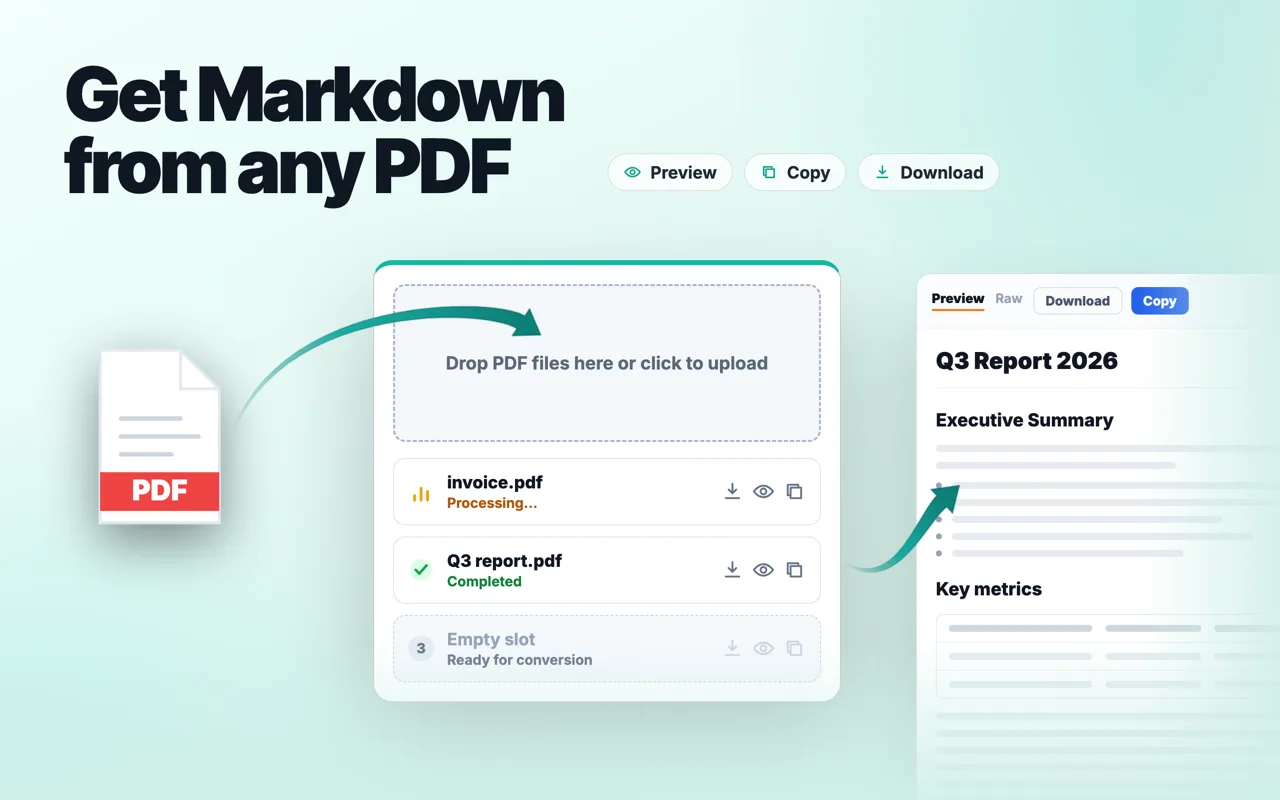
Turn any PDF into clean, readable Markdown – for people and for AI agents.
Handles messy, real-world documents, not just perfect ones. Use it as a web app, a browser extension, a REST API or a hosted MCP endpoint.
- Web app at pdf2md.dev – convert without installing anything
- Preview, copy or download clean Markdown
- Real backend: two public domains, one entitlement-aware job core
- API and hosted MCP for agents and automation
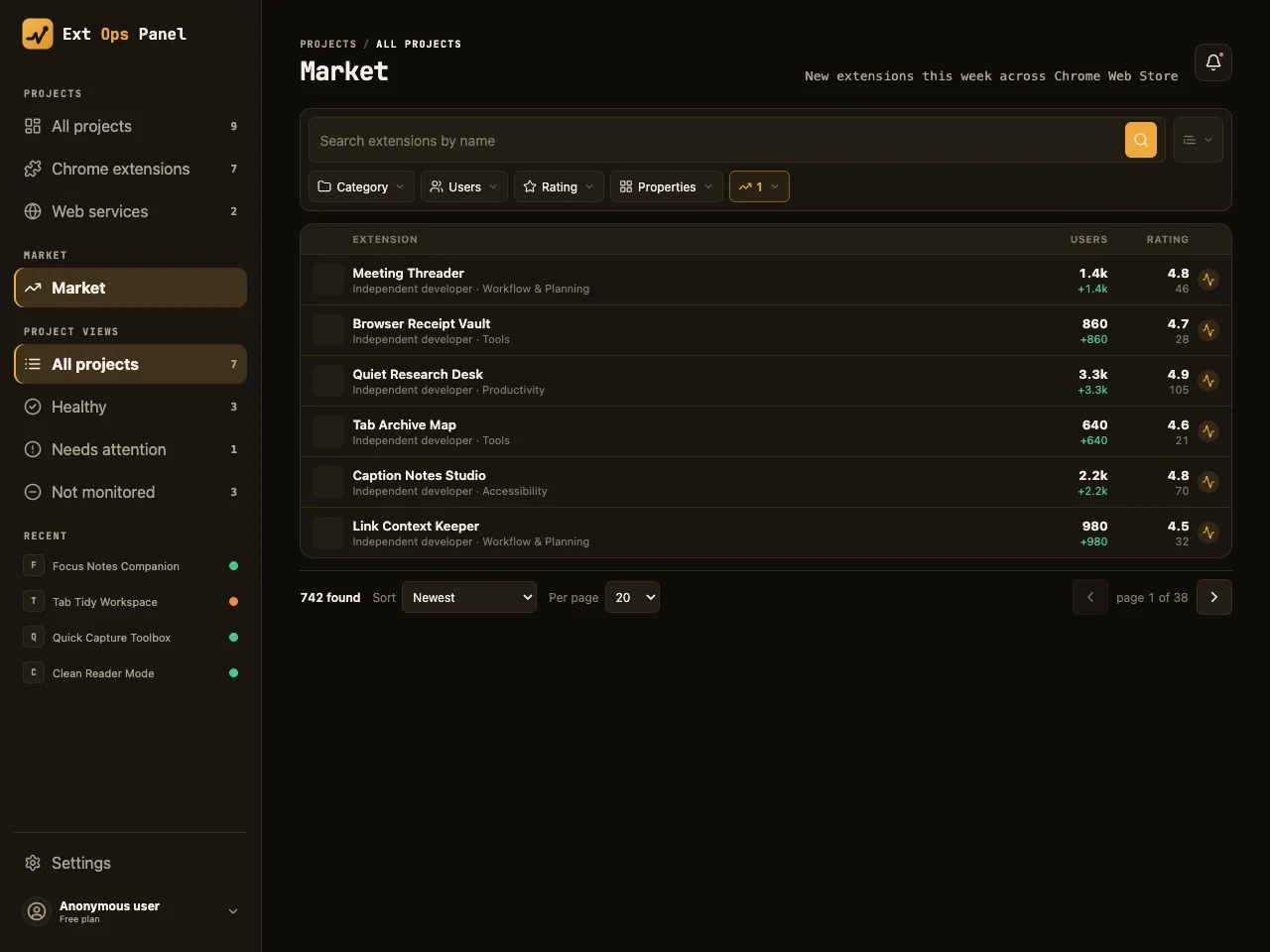 Watch the fieldNew competitors and emerging categories, updated daily
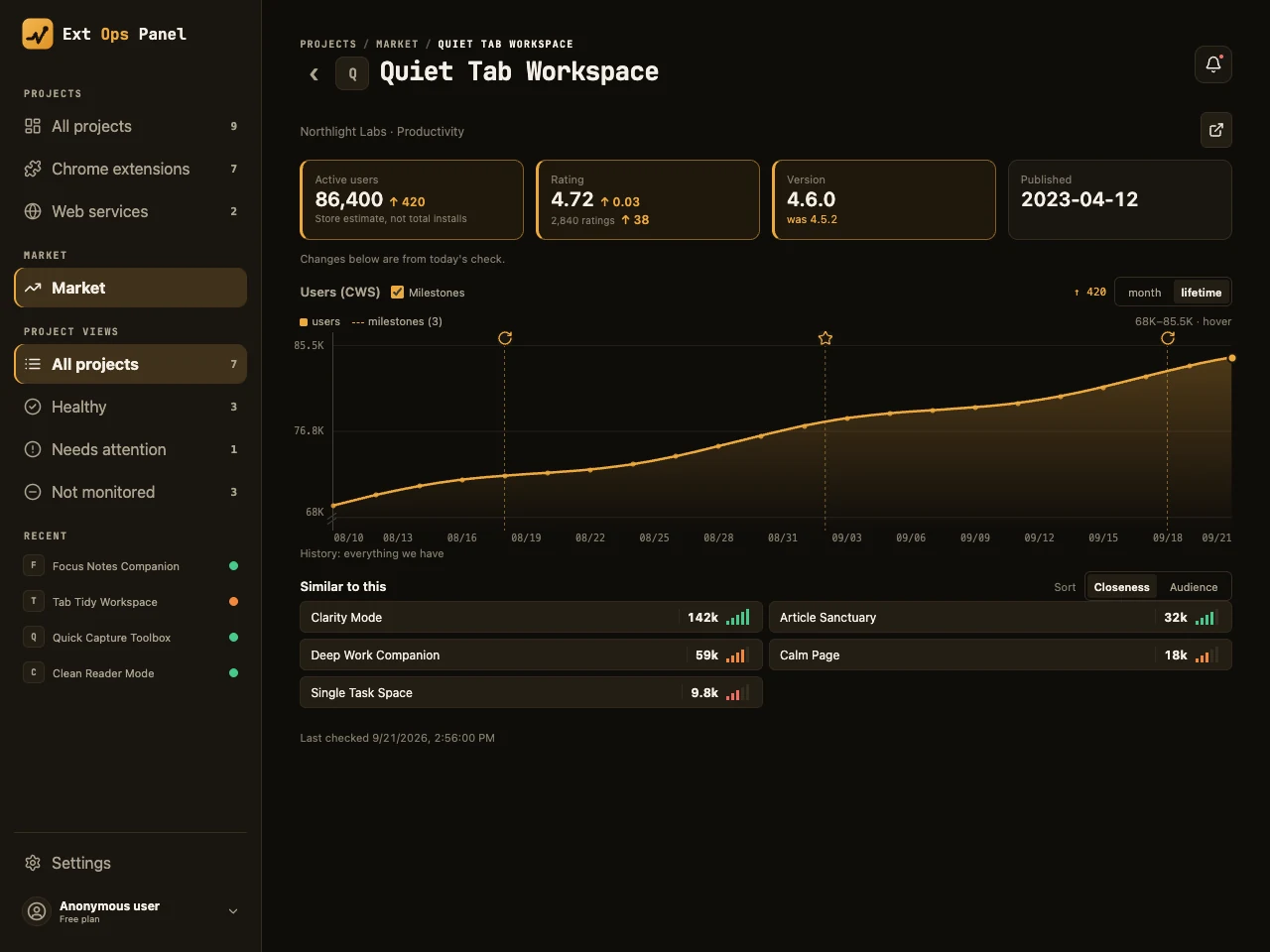 Compare momentumAudience, rating, reviews and releases over time
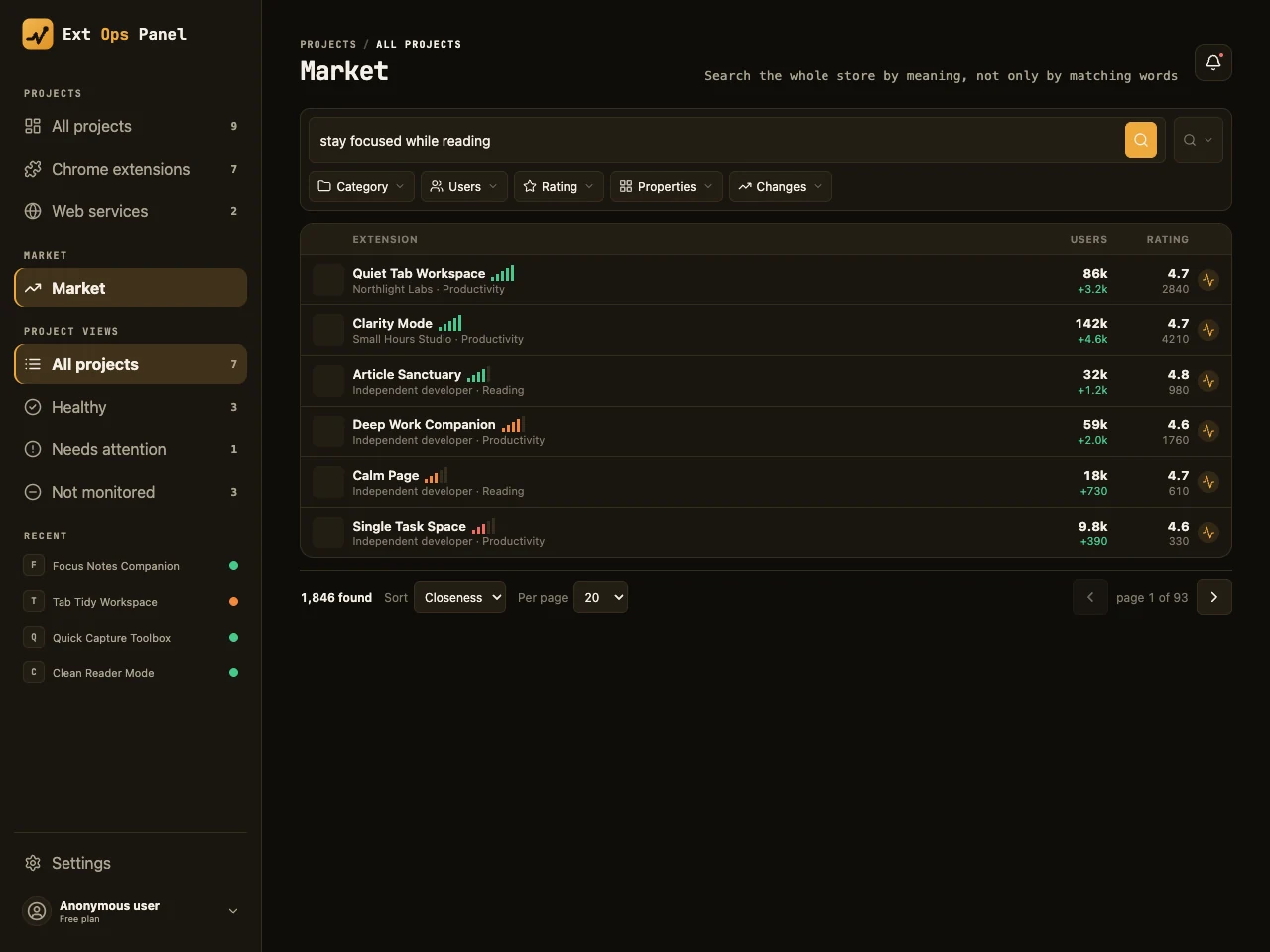 Find the real competitionProducts solving the same job with different words
Ext Ops Panel
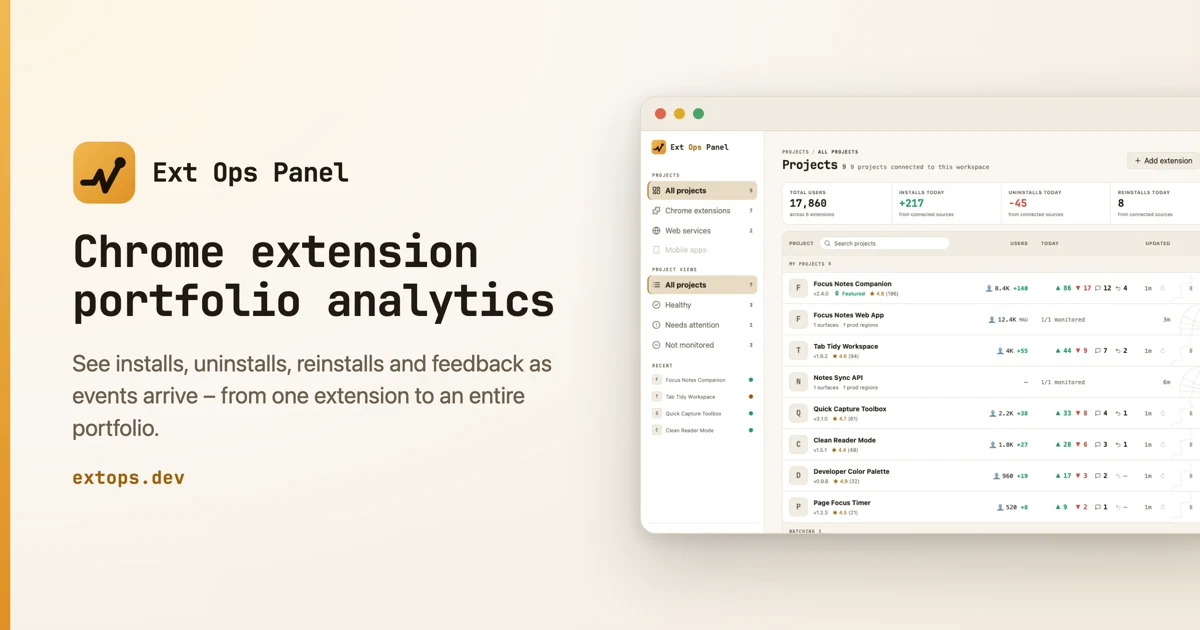
Competitive intelligence for the whole Chrome Web Store, and an operations workspace for the products you own.
Market turns daily observations of 300,000+ listings into context for product decisions: find true alternatives by meaning, follow new launches, and compare how competitors' users, ratings, reviews, versions, permissions and listing copy change over time.
Your workspace closes the loop on your own extensions and web projects: one portfolio for lifecycle analytics, charts and custom metrics, listing audits, hosted welcome and uninstall flows, health monitoring and alerts.
- Research direct and unexpected competitors through semantic search and similar-extension groups
- Compare competitor momentum and dated listing changes, not just today's snapshot
- Track installs, uninstalls, reinstalls, feedback and reasons for leaving across your portfolio
- Audit listing copy, target queries, policy signals and content quality before publishing
- Bring backend KPIs, active URL checks and passive heartbeats into the same dashboard
- Receive in-app, Web Push and Telegram alerts when a project needs attention
One-minute demo: hosted lifecycle pages, uninstall feedback and portfolio analytics. Nothing is requested from YouTube until you press play.
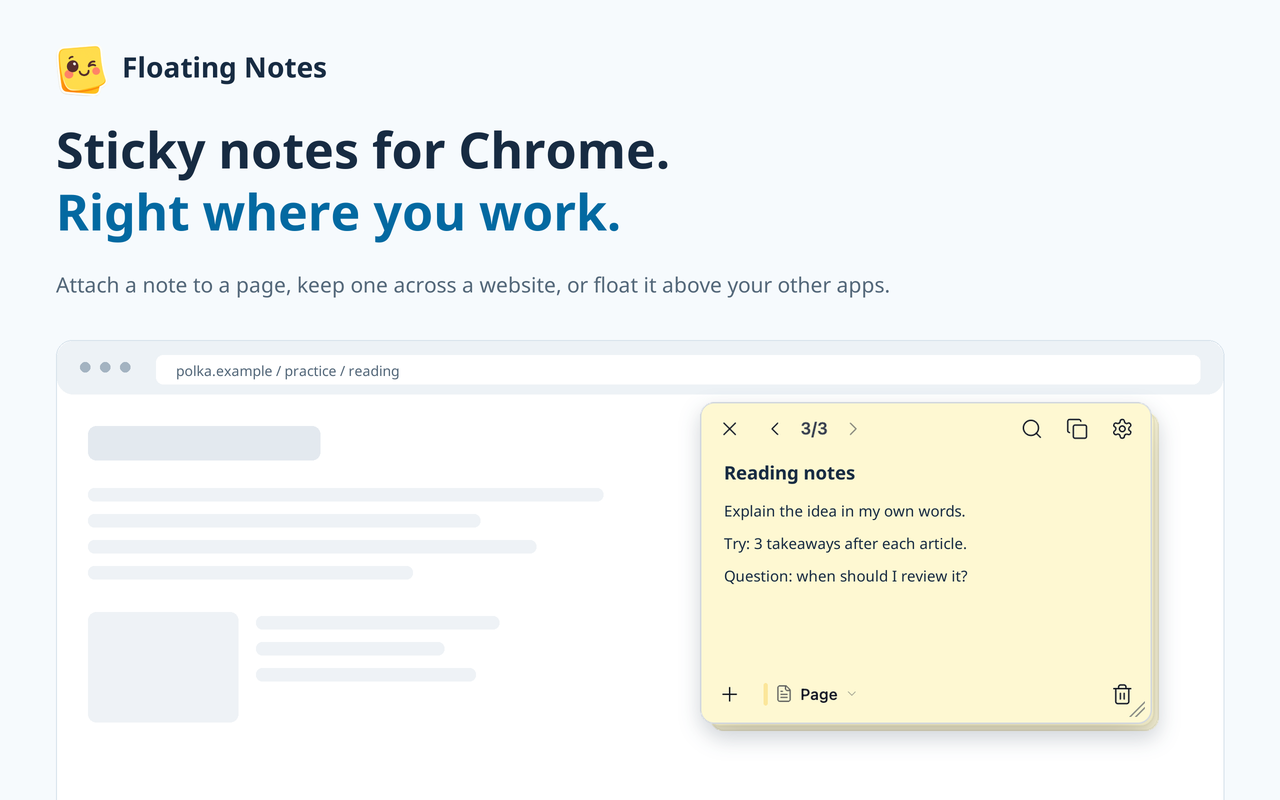
Floating Notes
Sticky notes for Chrome – right where you work.
Keep an idea beside its source, carry a checklist across a website, or open a note above other apps. The extension has grown into a small, private workspace that stays out of the way.
- Page notes, site notes, stacks and an always-on-top window
- Checklists, links, formatting and search across every note
- Capture selected text together with a link to its source
- Works offline with no account; optional Pro sync uses your Google Drive

A weekly reflection, not a score
Life Audit NEW
Make room for your life. A quiet weekly reflection by Sunday Reset.
Look back at what actually happened across five areas of life, see the week as a whole, and choose one thing you want more of next week.
- Record moments in your own words – no scores or streaks
- See one week as a five-part wheel or day-by-day table
- Rename the five areas so they sound like your life
- No sign-up; entries stay in your browser

Multi Timer
Multiple parallel timers and alarms in Chrome. Named timers, presets, group launch – offline, no accounts.

Journaling App
AI-powered journaling with metaphorical cards. Draw a card, reflect with guided templates, get a clear next step in 2-7 minutes.
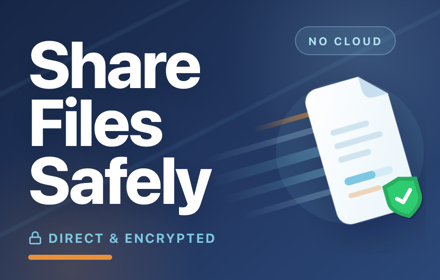
Secure File Transfer
Send files directly between devices, end-to-end encrypted. P2P via WebRTC – no cloud, no sign-up, no size limits.
Image to Base64 &
Base64 to Image
Two-way converter: turn any image into a Base64 / data URI string, or decode Base64 back into an image. SVG supported. No uploads, no network – everything runs locally.
How I think about tools
After years of building large systems, I've learned that most tools fail not because they lack features, but because they interrupt the user.
I believe good tools:
- respect context
- do one thing well
- stay reliable over time
- and don't demand attention they haven't earned
Under the hood
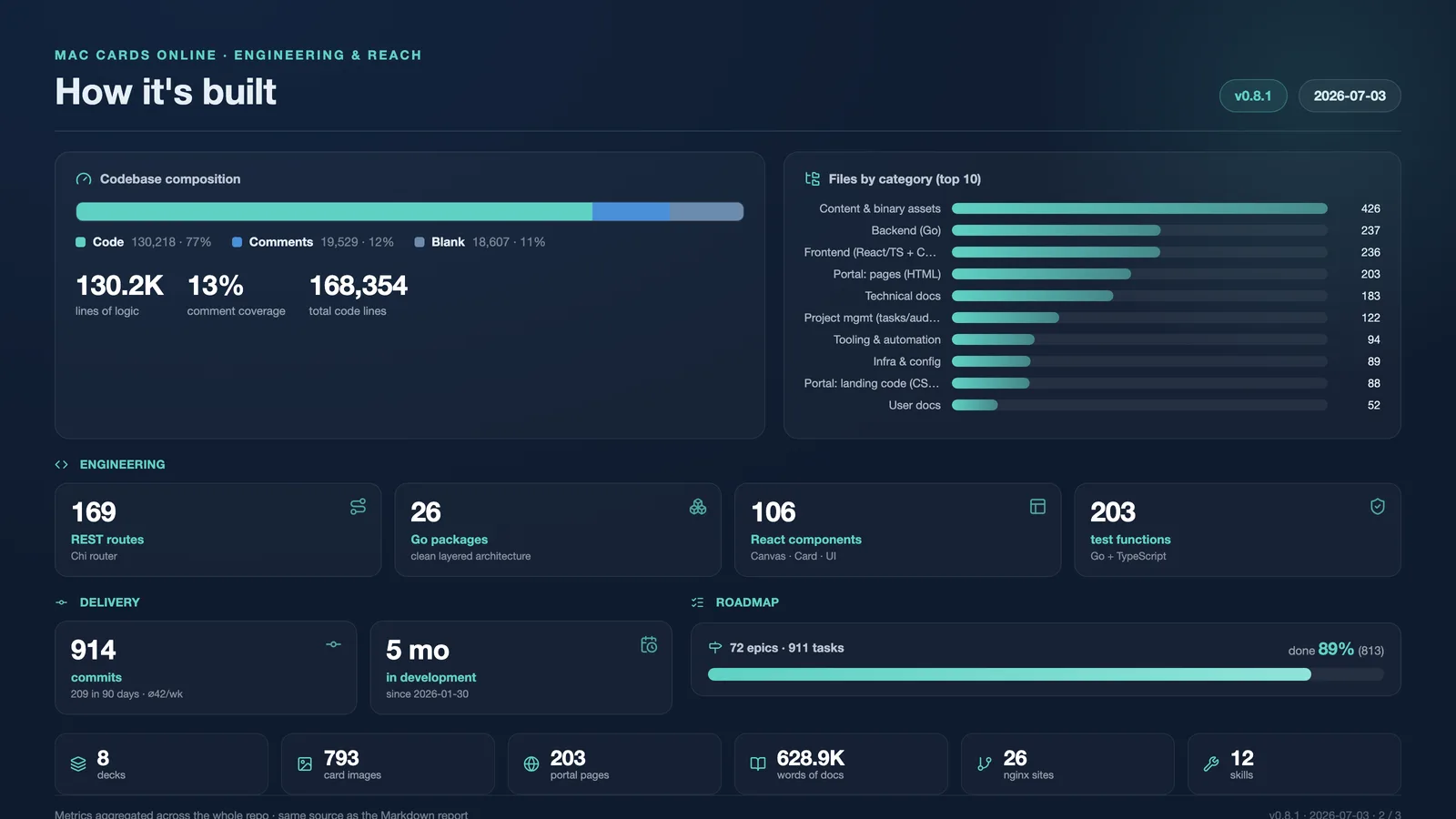
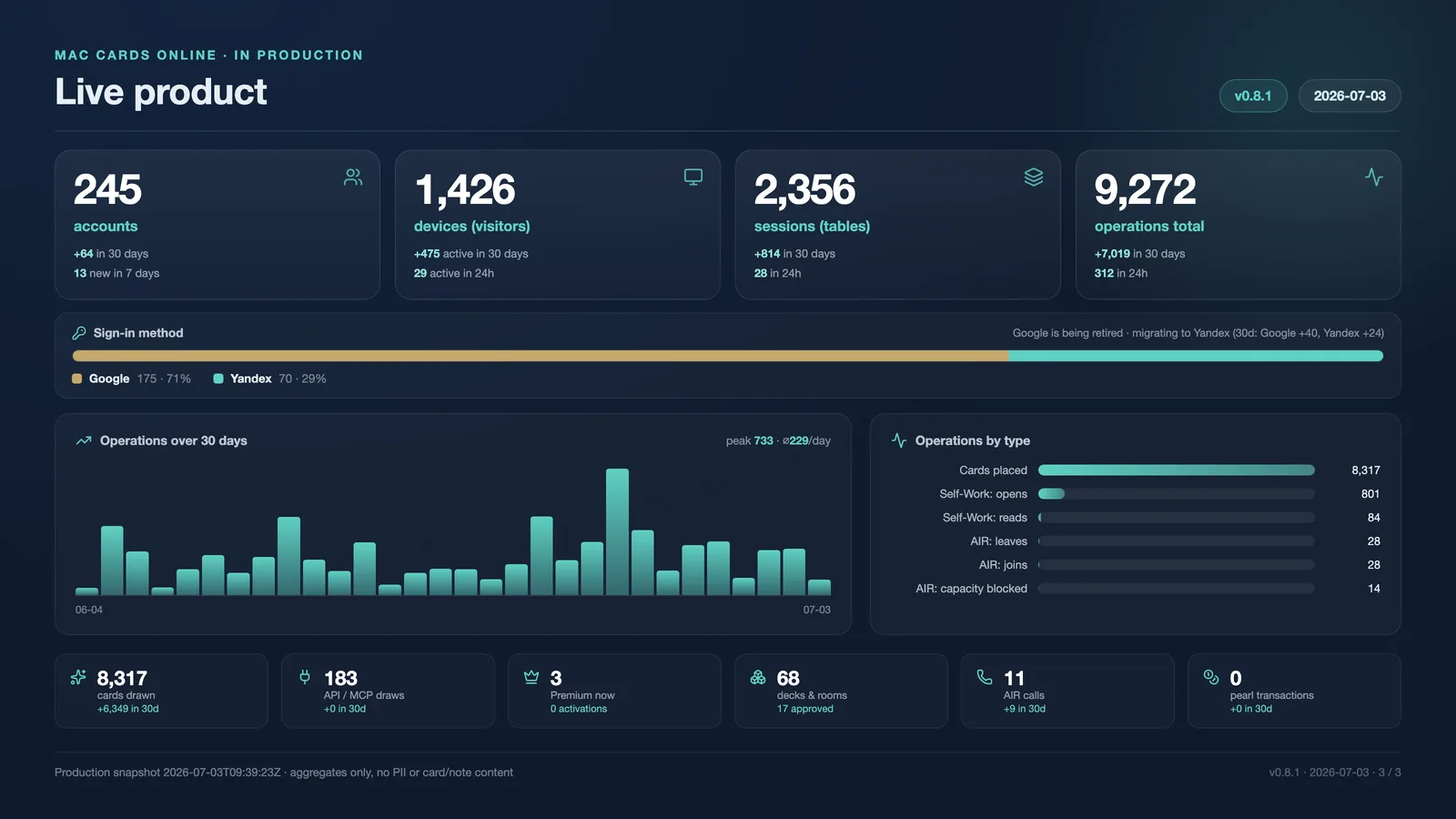
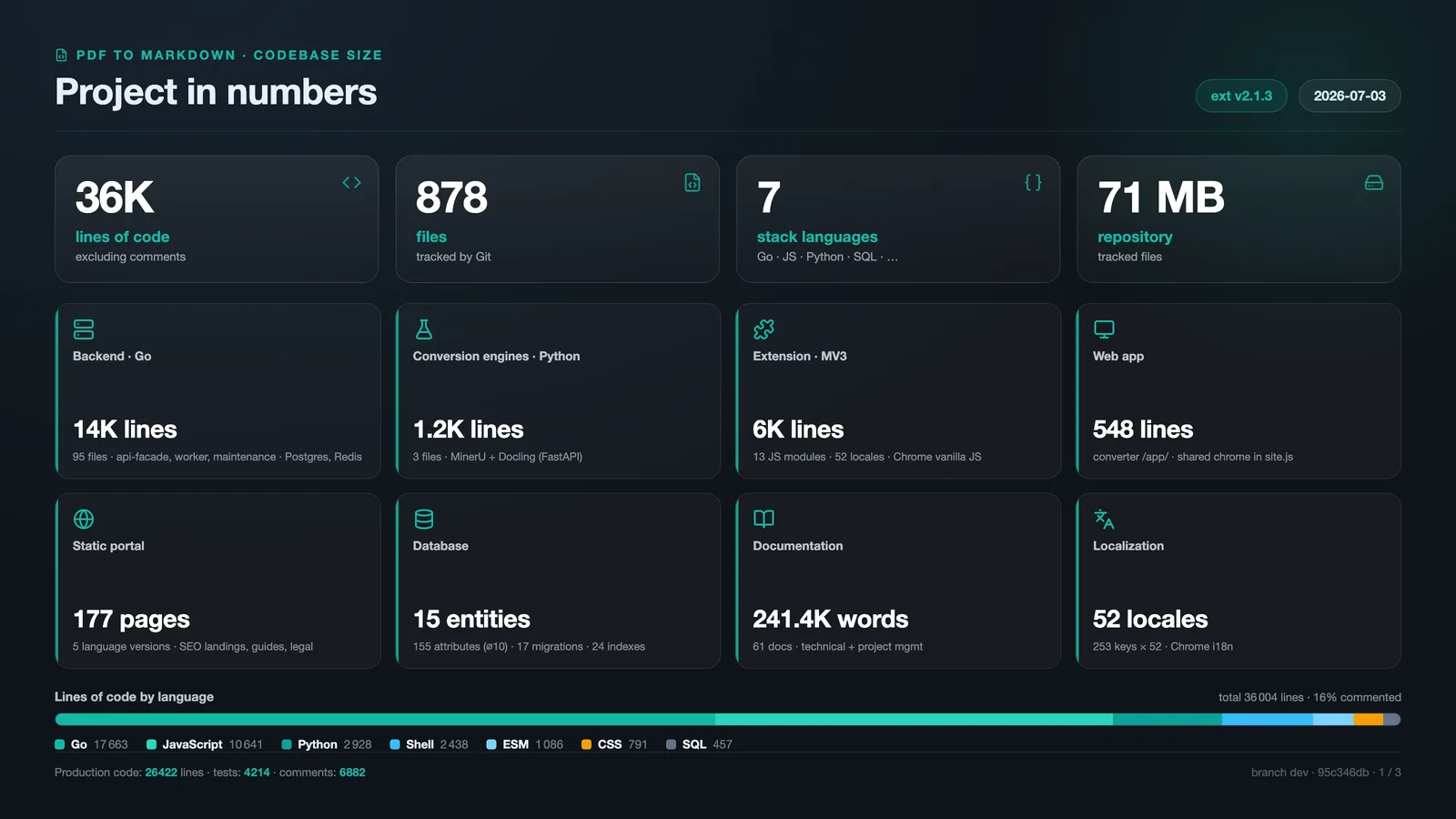
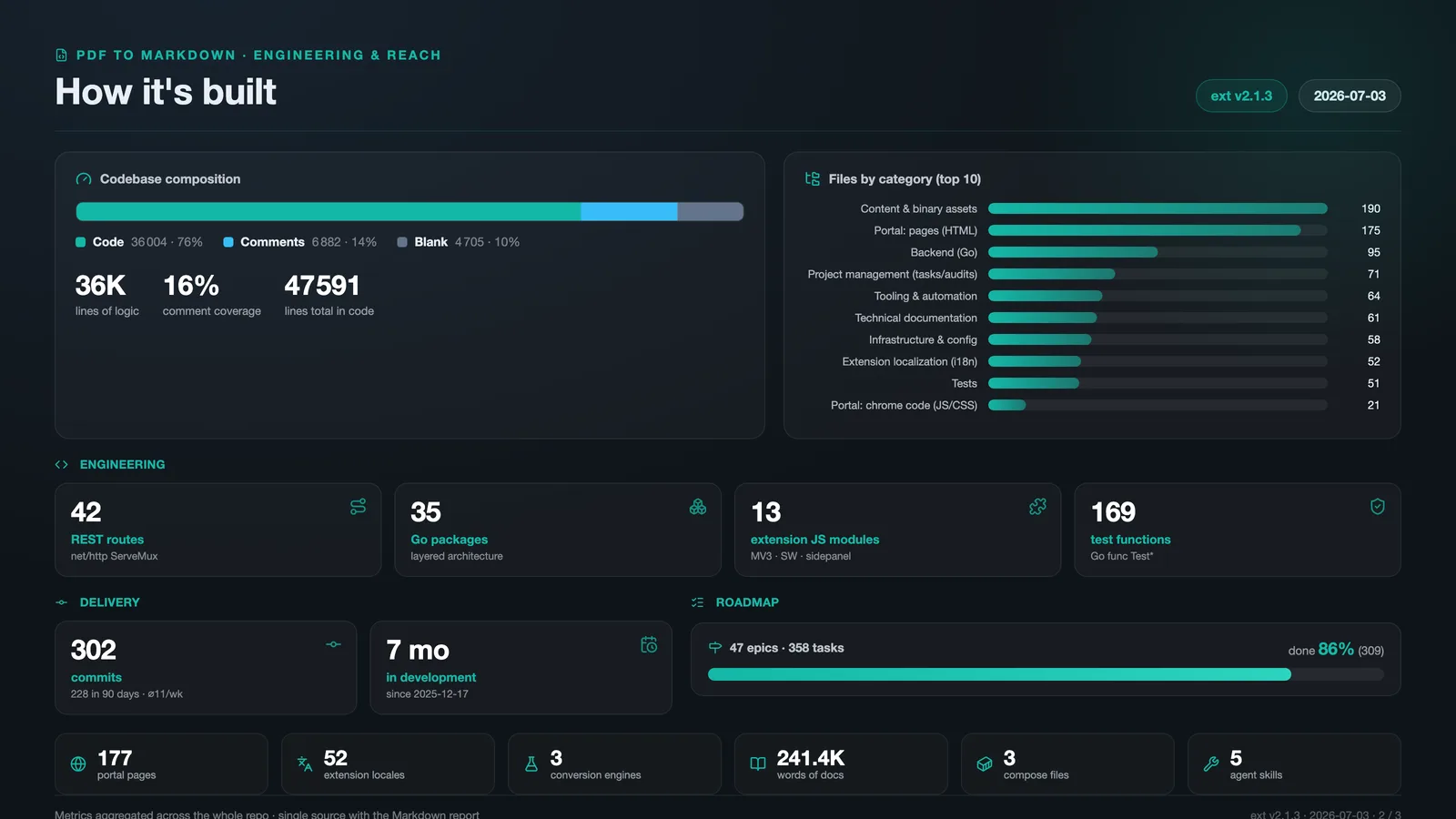
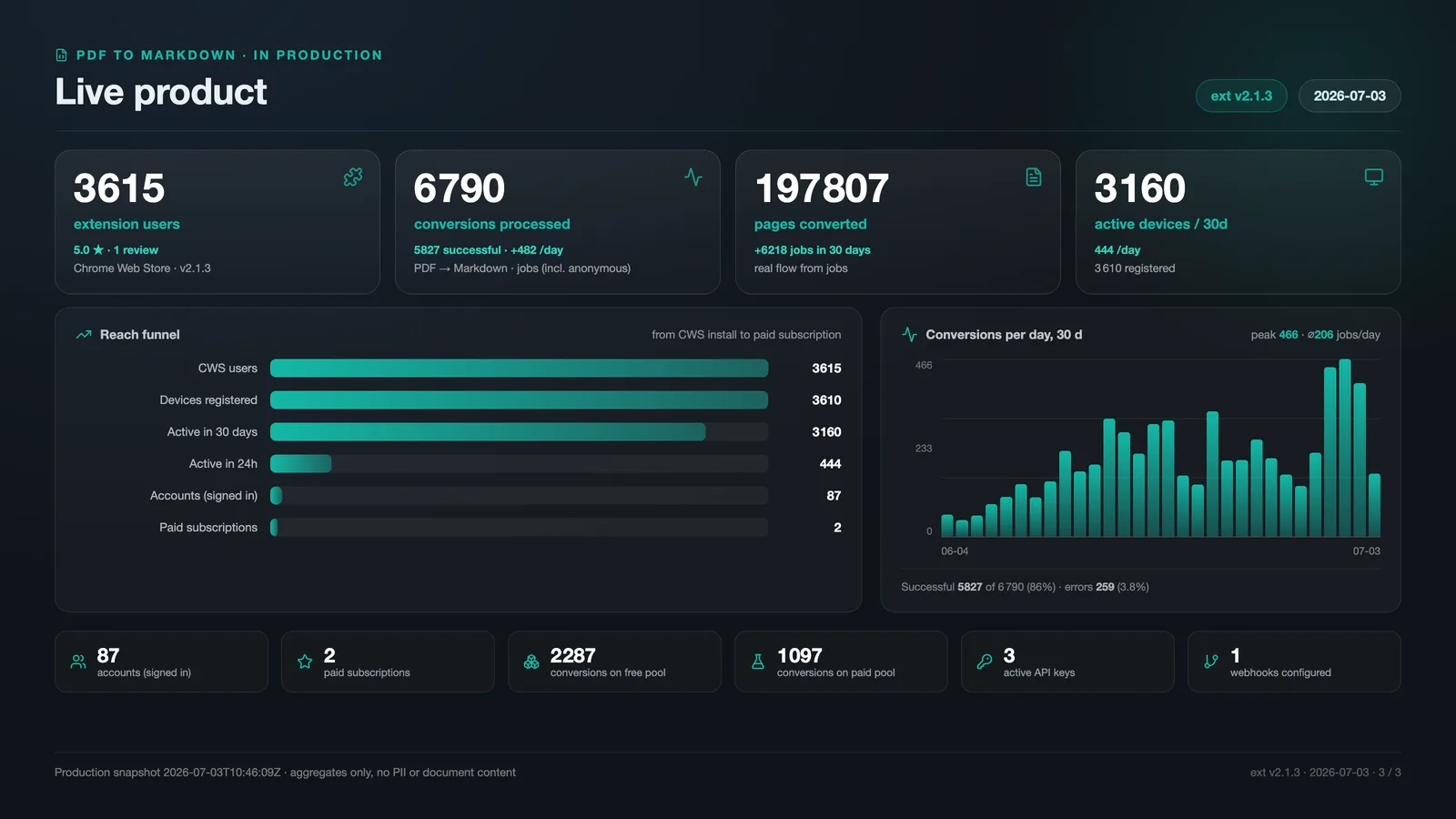
These dashboards and the architecture map aren't slideware. They're generated straight
from each repository by tooling I built – a metrics pass over the git tree
plus a live snapshot from production. The numbers here are the numbers in the source.
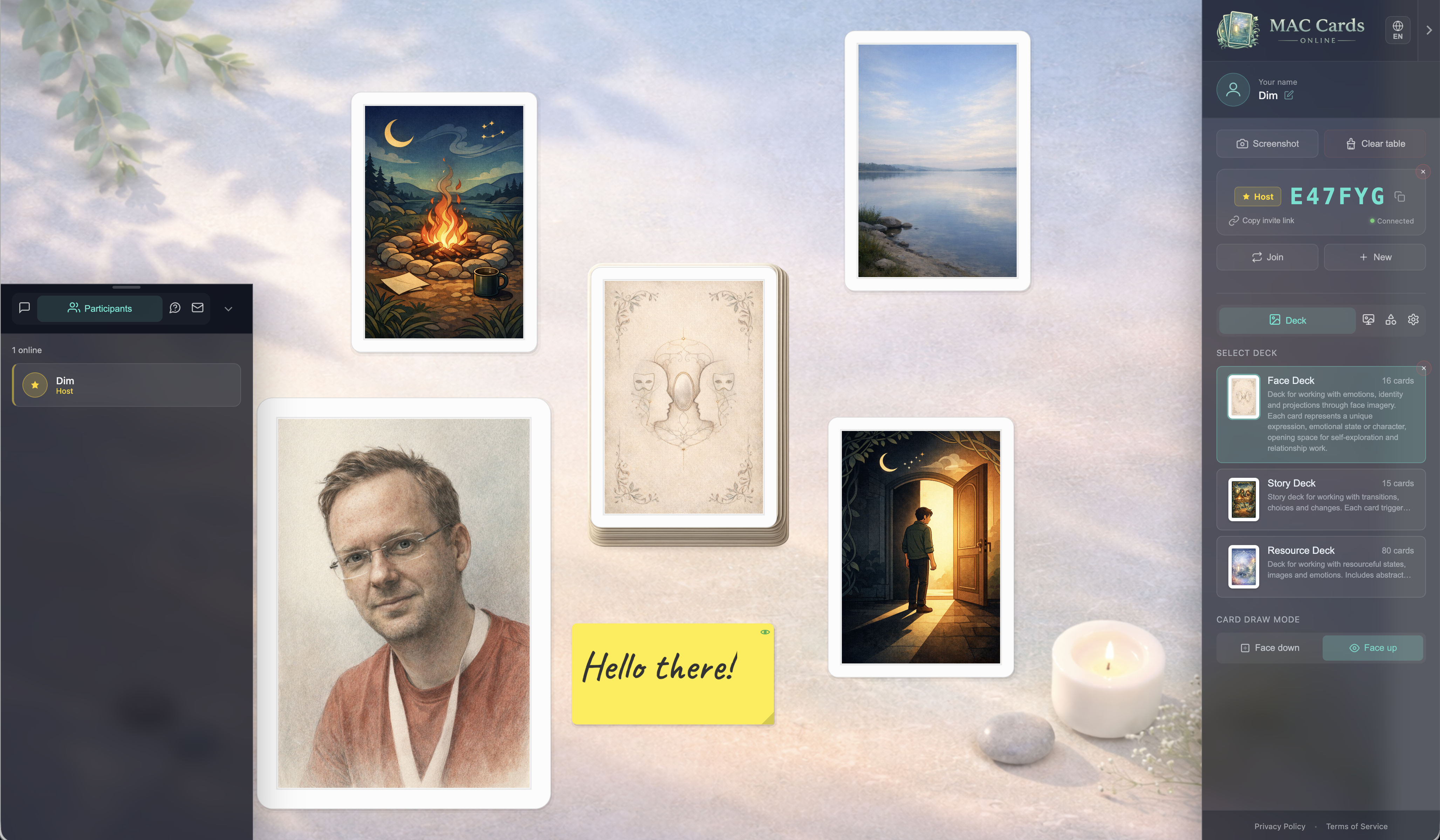
MAK Cards Online
Real-time card platform · Go + React + MCP · v0.8.1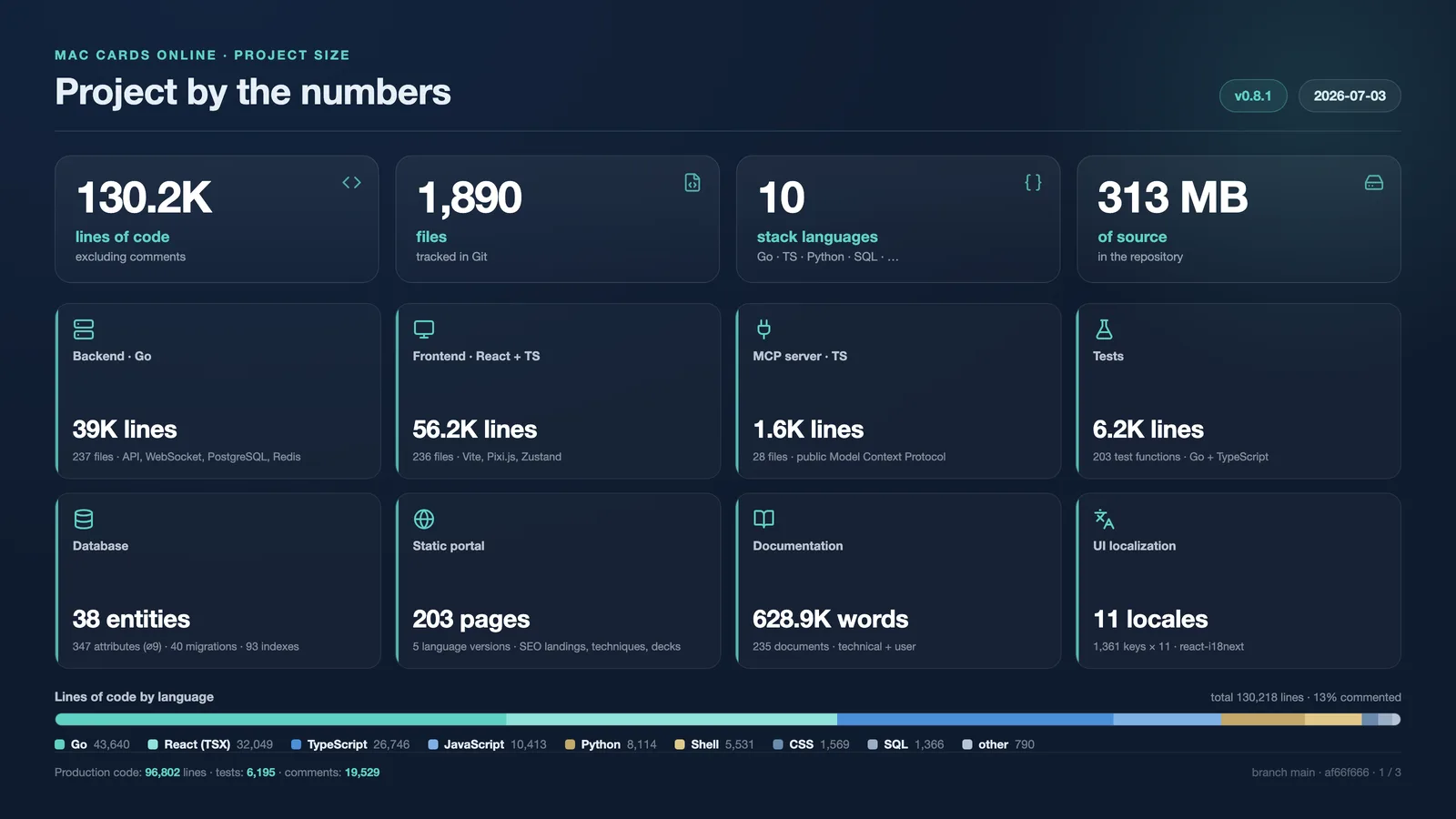
PDF to Markdown
PDF → Markdown · Go + Python engines · MV3 · v2.3.2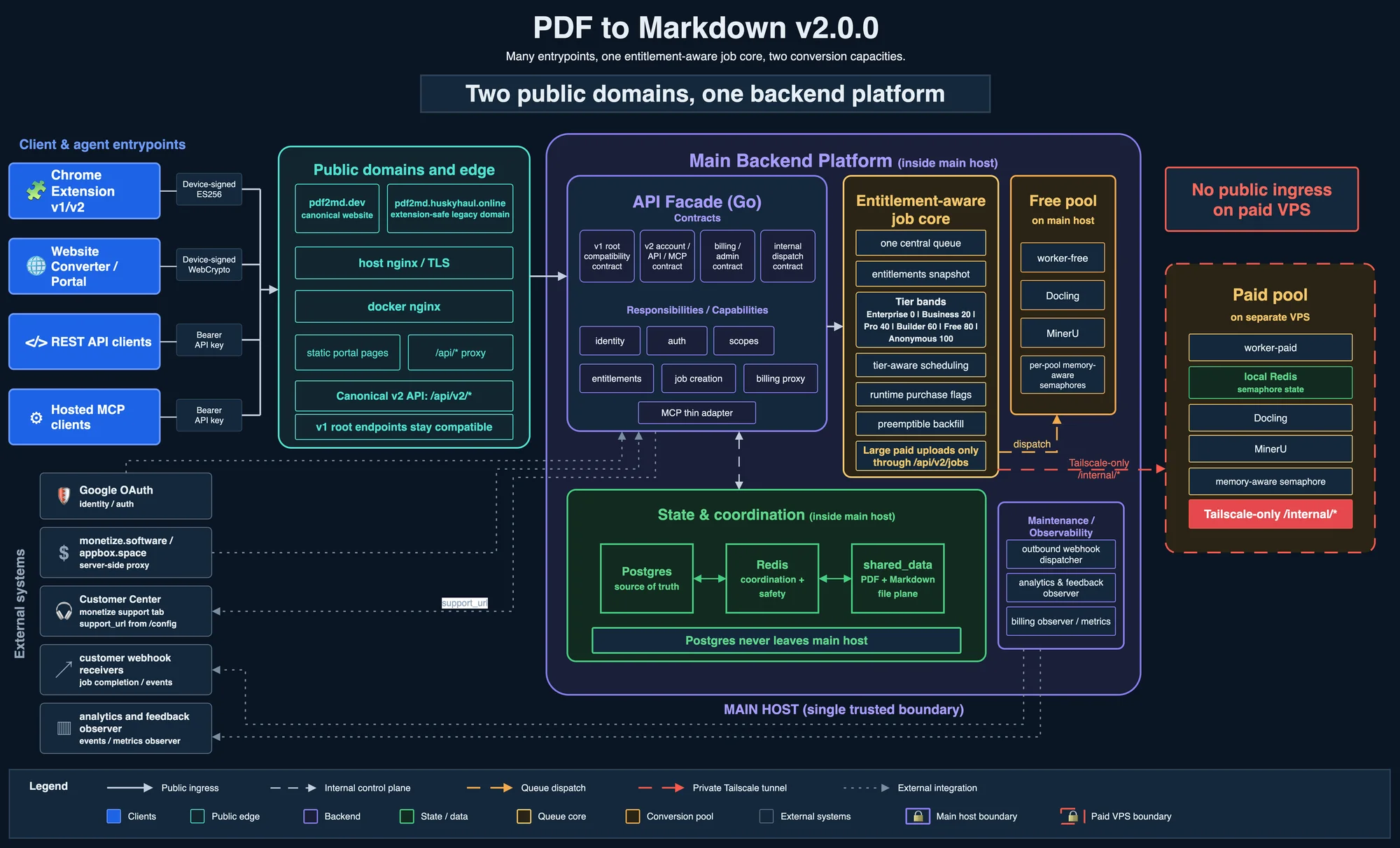 System architecture – many entrypoints, one entitlement-aware job core. Click to zoom.
Research & articles
 Article on Substack
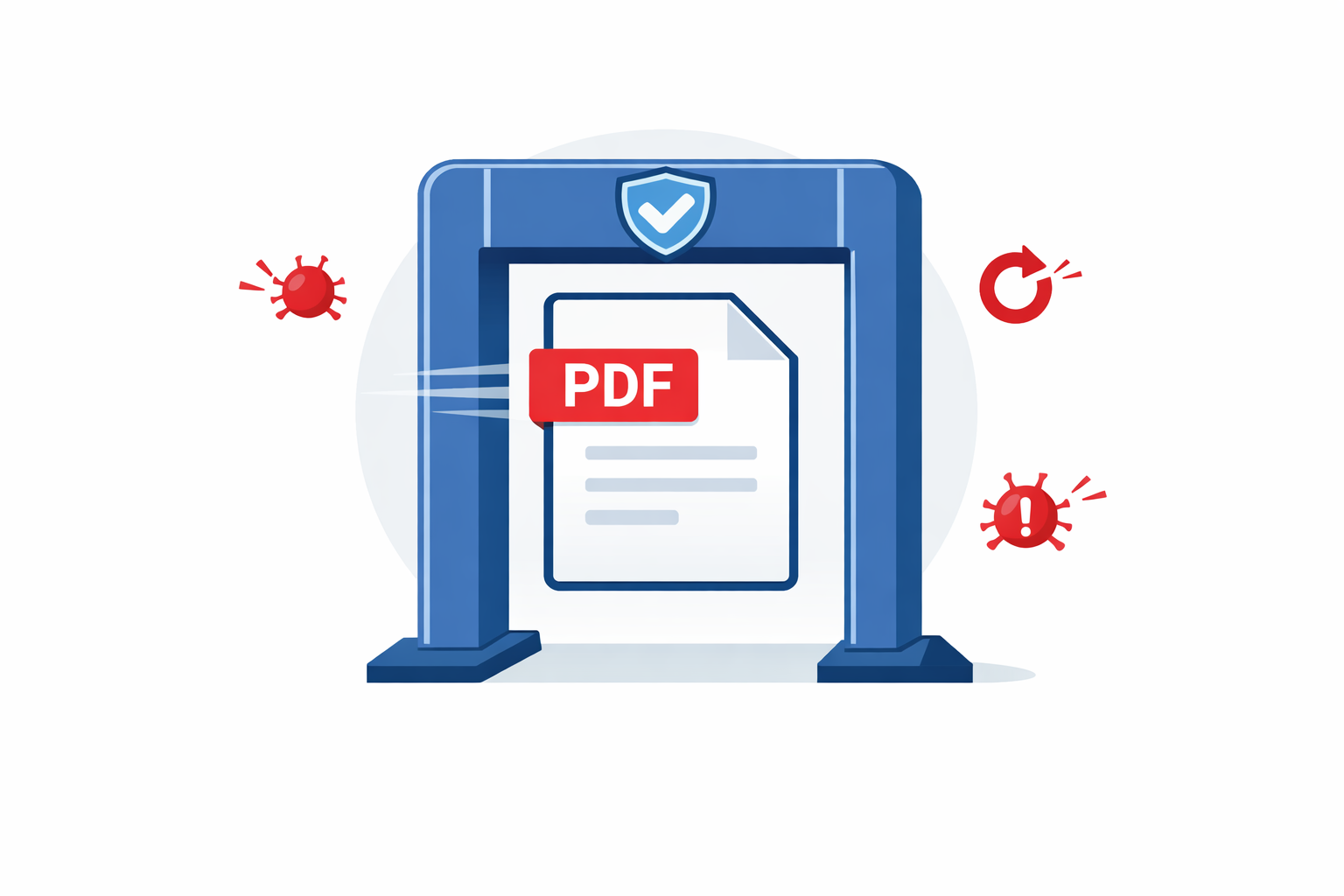
Secure File Upload in Go: 7 Attacks and How We Blocked Them
"Add a PDF upload form" sounds like a 30-minute task. But a working upload and a secure upload are two different things. I broke down 7 real attack vectors on file upload and showed how we mitigated each one in a Go backend – with real code and honest trade-offs.
- File type spoofing – magic bytes %PDF validation, never trust extensions
- Disk overflow – MaxBytesReader + per-device slot limits
- Path Traversal – fixed paths {UUID}/input.pdf, zero user input in paths
- SSRF – pre-request DNS resolve, redirect blocking, private IP denylist
- Replay attack – nonce + timestamp + ECDSA signature per request
- Device spoofing – cryptographic identity via WebCrypto (ECDSA P-256)
- Application-level abuse – rate limit + signatures + slot system
 Article on Substack
What Dog Training Taught Me About AI Agents
What dog training unexpectedly teaches a manager who works with AI agents: about signal quality, safe autonomy, and the cost of literalness. Five lessons that changed the way I work with agents and assign work to people.
- Clarity is not politeness – it is a safety practice: agents amplify both competence and vagueness
- Reinforcement beats endless correction – successful sessions become an operating standard
- Autonomy is useful only inside a good fence – freedom without boundaries is negligence
- Environment shapes behavior more than one-off instructions – management in the AI age is behavior architecture
- An agent's error is a diagnostic signal: in 9 out of 10 cases the problem is the task framing, not the tool
Writing & notes
I occasionally write about building tools, architectural decisions, and lessons learned from shipping and maintaining real products.
Selected articles:
About dimlight
dimlight is my personal space on the internet.
It's where I share what I build, experiment with ideas, and publish tools that don't fit into big platforms.
You may also see me online as dim0802.